
How to Dye Easter Eggs with Tea
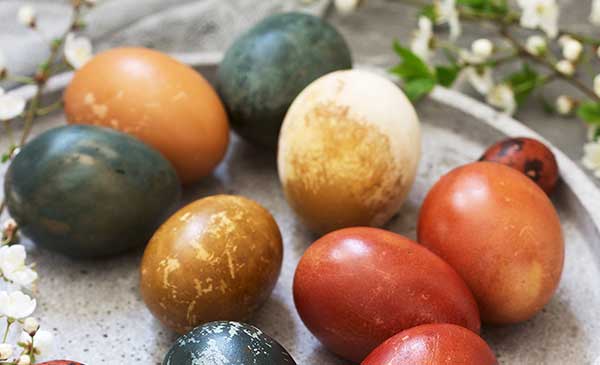
Looking for new, natural easter egg dyeing ideas this year? Add some creativi-tea this year to dyeing easter eggs for amazing and unique results using loose leaf tea.
How to Make Tea Stained Eggs
Makes 4 eggs per color.
Ingredients:
2 c boiling water
Loose leaf tea (see below for tea type color chart)
1 T white vinegar
Hard-boiled eggs
Equipment:
Medium bowl
Slotted spoon
Directions:
1. Combine boiling water, vinegar and tea in your medium bowl. When the tea has cooled to room temperature, leave in the tea leaves and add three to four boiled eggs to the bowl.
2. Refrigerate the eggs in the tea for six to eight hours, or overnight.
3. When the time is up, remove your beautiful eggs from the tea with a slotted spoon, carefully wipe them dry with a paper towel.
Tips for Dyeing Easter Eggs:
For a more intense transfer of color, brew your teas twice to three times the usual strength.
Some teas will not dye the eggs with the color you anticipate, so be ready for this and experiment! Example: Hibiscus will actually create grey eggs, and not the bright red you would expect.
The eggs will take on a bit of the tea flavor and may stain the egg under the shell. This just adds a unique twist to your deviled eggs or egg salad.
Color Results for Tea Stained Eggs:
1 tablespoon of black tea + 1/2 cup beet juice = REDDISH BROWN
1 rounded tablespoon of saffron tea = ORANGE
2 tablespoons of turmeric tea = YELLOW
1 tablespoon of green tea + 1 T matcha (plus a dusting of matcha after dyeing overnight) = GREEN
1 tablespoon of blue mango = BLUE
1 tablespoon of raspberry tea = PINK
Happy Easter!
Previous article

Next article